
Wild Birds
Wild Birds
Each year we care for hundreds of birds, from Blackbirds to Quail and many in between!
NOTE – Birds of prey require a specialist rescue as soon as possible.
A large majority of birds are the victims of road traffic accidents and predator attacks. Weather plays a part too; snow and ice, along with extended periods of drought can have a detrimental effect upon wildlife. Nests can be blown from trees during high winds, which can also blow migrating birds off course.
Chicks are often brought in; some have fallen from the nest, some after being attacked as fledglings, and others from nests that are disturbed and damaged as a result of tree felling, shrub and hedge pruning and the removal of climbing plants such as ivy or vines.
Birds come to us injured and often infected with viruses and diseases. Less common are birds born with deformities. Our aim is to release all wild birds. If a bird is unable to fly due to extensive injuries that cannot be treated, sadly, the only option is be euthanised by a vet.
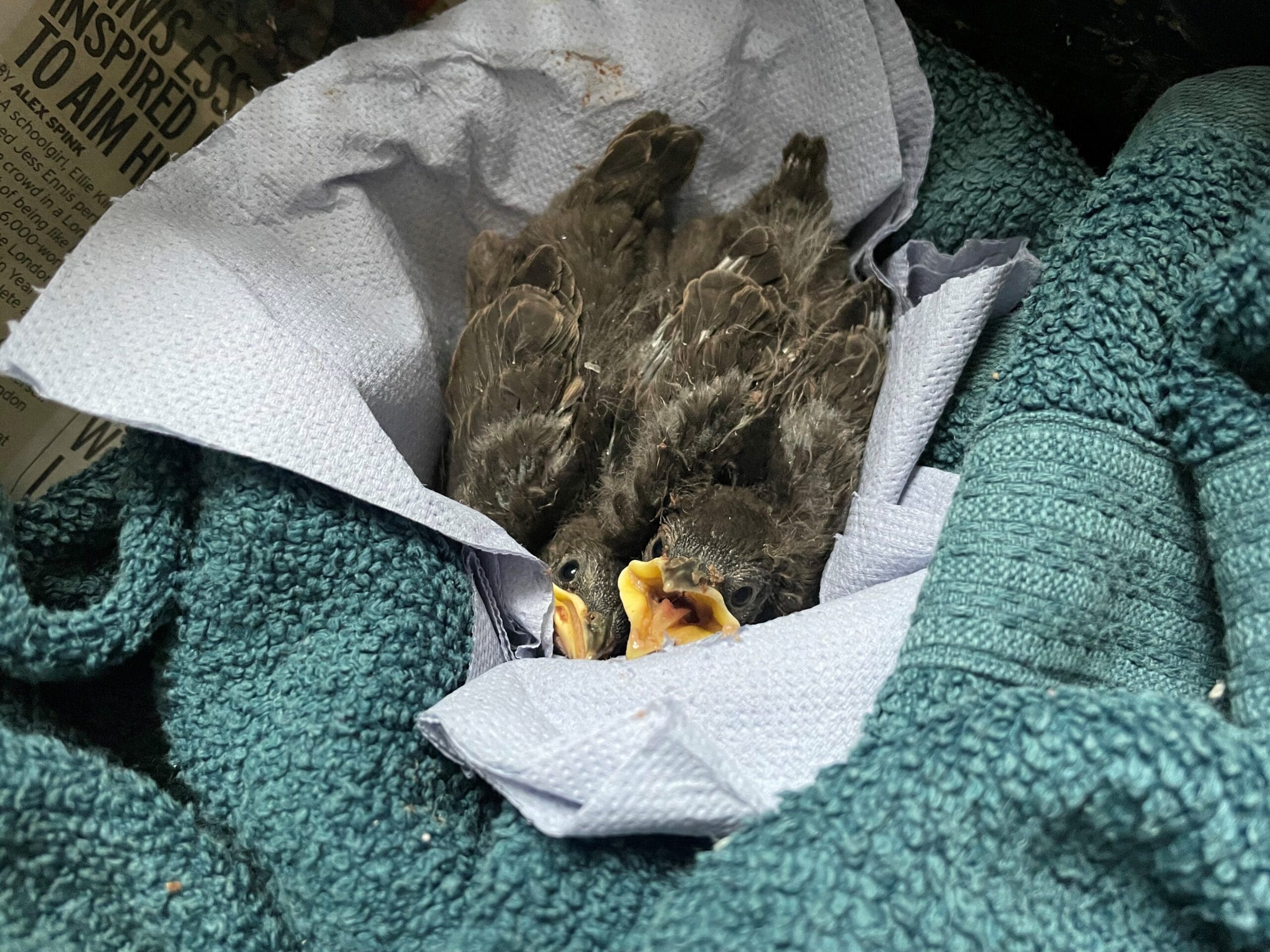
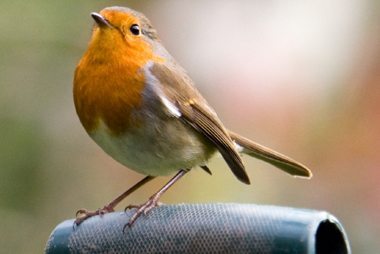
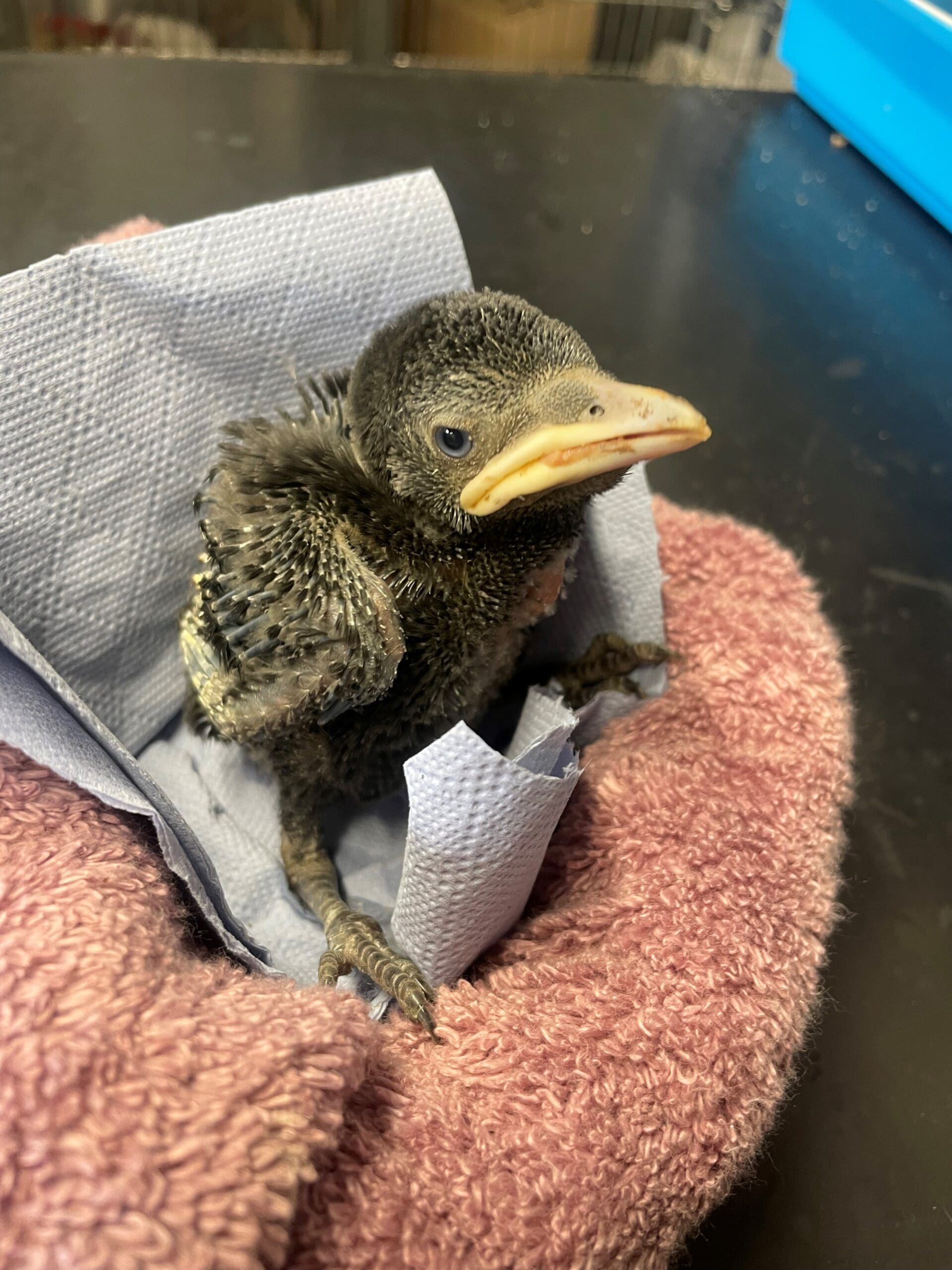
On admission, the birds will be assessed and will see a vet throughout their stay with us. Each bird has a specific dietary requirement and is individually catered for. Once fit and healthy, they are placed in aviaries where they are monitored prior to release. Birds are always released in an environment that is suitable for their individual needs.
Chicks of all types are hand-reared by our staff until they are able to feed themselves. Staff regularly take very young and vulnerable chicks home each evening to provide extra feed and warmth.
Water birds have a specially designed water aviary which ensures, their feathers are fully waterproofed, and they are strong swimmers. Once we are sure of that and the flight feathers are in, they are released so they have the best chance of survival.
Wild Bird Facts
• UK’s largest bird is the mute swan, one of the heaviest flying birds in the world.
• The smallest is the Goldcrest measuring just 9 cm long and weighing approx 5 – 7grams. The Firecrest is also small but rarer, measuring around 9 cm and having an orange crest.
• Most small garden birds live between 2 to 5 years. However, only a small percentage reach adulthood. Seabirds by comparison are often extremely long-lived. Fulmars can reach 50 years old. They don’t start to breed until in their 20’s.
• There are 640 recorded species of bird in Britain.
• All birds evolved from a group of dinosaurs known as theropods.
• Since 1970, populations of wild birds have declined by almost one fifth in the UK. This was mostly between the late 1970s and the early 1990s, but they continue to decline driven by lose of woodland and farmland birds.
• Our beloved cats are responsible for the largest number of birds killed; research shows an estimated 55 million killed birds annually from cats alone. Exposure to pesticides and contaminants, and road kills also contribute to large numbers.
How You Can Help
- When a fledgling leaves the nest two weeks after hatching, it has most of its feathers but hasn’t yet developed the ability to fly. They can flutter and hop about in bushes, shrubs and often on the ground. The parents will be around, and will watch and feed it. Unless a fledgling is clearly injured or is in immediate danger, please leave it alone.
- Nestlings have a limited number of feathers and are totally dependent upon the security and warmth of the nest. These chicks do need help.
- If you think a chick is abandoned, observe from a safe distance to see if a parent around and is feeding.
- If a chick is clearly abandoned or injured, catch it by covering it with a towel to avoid unnecessary stress and place it in a secure, ventilated box, with a minimum of handling. Take the chick to the nearest vet or rescue. Injured birds should be taken to a vet and most will treat wildlife for free.
- Avoid tree felling or pruning bushes, shrubs, ivy or vines during breeding seasons, and always check for nests before doing so.
- When feeding birds in the garden, the greater the food selection, the more birds you will attract.
- Keep bird feeders elevated and provide drinking water. If possible, a birdbath too which allows birds to maintain their feathers. Regularly clean all to prevent a build up of bacteria.
- It’s advisable to feed birds throughout the year as each season creates different challenges. Birds are extremely vulnerable over winter and require high energy foods, in spring and summer they are raising chicks, and autumn finds them moulting in preparation for winter.
- Appropriate bird feed can be found in pet shops and supermarkets.
- Don’t feed white bread or chips, and especially mouldy bread to ducks, geese or swans as this can lead to major health issues, and prevents birds from flying. Too much bread or chips also causes bloating, making the birds lethargic and sickly looking.
- The imbalance of protein and carbohydrates in the diet is passed on by adult birds to their young as they develop in the egg, and can cause deformed wings, known as Angel wing, as they grow. Uneaten bread also causes bacteria to develop in the water.
Donate Here
Lost & Found Pets

Merchandise
Exclusive merchandise available direct from the rescue. Don't miss out, follow the link to make your purchase today.

Freshfields Lottery